Originally posted in collaboration with The Connecticut Collaborative to End Loneliness here.
Settling into Norwalk
My wife and I moved to Norwalk two and a half years ago, and over time it has started to feel like home. We’re putting down roots, building relationships, and imagining our future here.
As that’s happened, my broader hopes including creating a healthier, more connected, more civically engaged, and more hopeful community have naturally become focused on this city. Norwalk is no longer an abstract place where I live; it’s where I want to help build something lasting.
Noticing an opening
When the new Mayoral election was coming up, and the incumbent mayor stepped down, the field was wide open. I knew it was a chance to get people involved.
We really can make a difference in local elections. Creating that positive feedback loop between effort and outcome is going to be valuable if we want folks to get more civically engaged!
The conventional wisdom focuses on things like phone banking and door knocking—useful, for sure, but I’m more interested in building real lasting connection and value as we go.
Settling into Norwalk
My wife and I moved to Norwalk two and a half years ago, and over time it has started to feel like home. We’re putting down roots, building relationships, and imagining our future here.
As that’s happened, my broader hopes including creating a healthier, more connected, more civically engaged, and more hopeful community have naturally become focused on this city. Norwalk is no longer an abstract place where I live; it’s where I want to help build something lasting.
Noticing an opening
When the recent mayoral election took shape and the incumbent stepped down, it felt like a moment of possibility - not because of politics, but because of people.
Local elections are one of the few spaces where neighbors still have the chance to see each other, talk to each other, and feel that their presence matters. What drew me in wasn’t policy or party, but the question of connection: how people learn what’s happening in their city, how they feel welcomed into civic life, and what helps them move from being passive residents to engaged neighbors.
Starting small at the Saturday market
I was already volunteering monthly at a table at the Saturday market in town. It’s a simple setup, but it’s also one of the most relational spaces in the city - a place where people linger, recognize familiar faces, and strike up conversations.
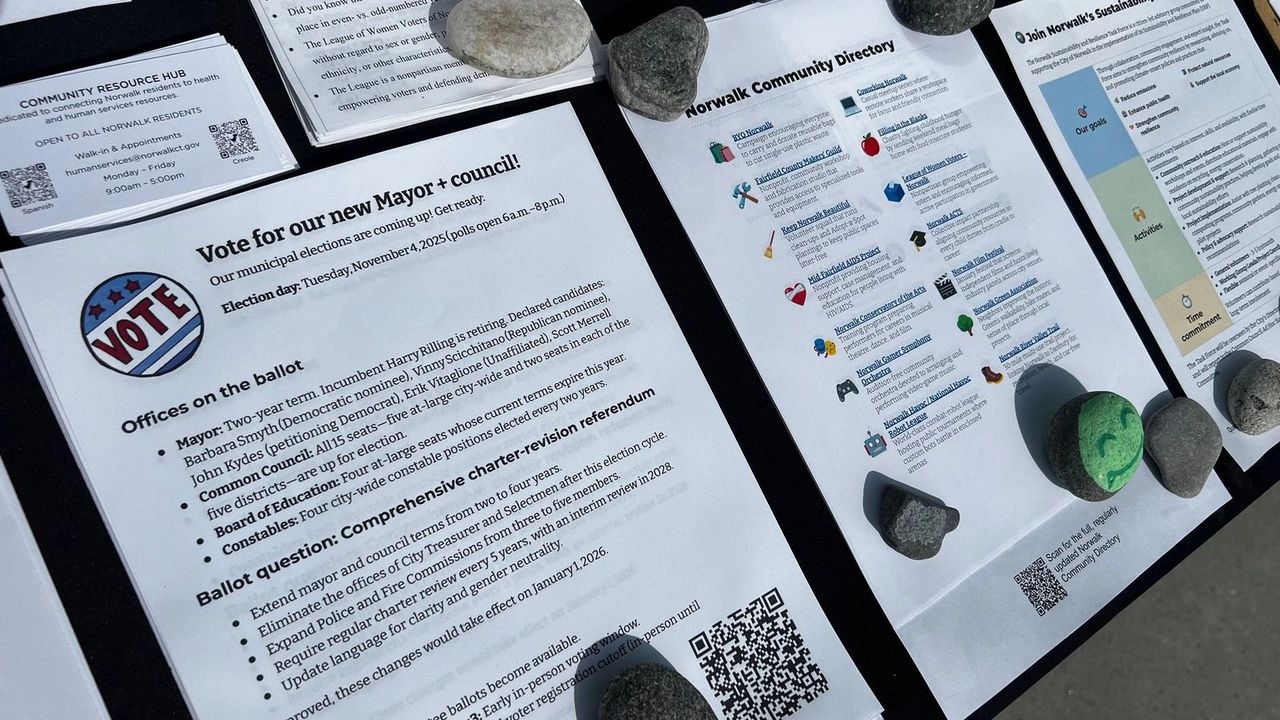
I began adding basic information about the upcoming election - dates, deadlines, and the fact that there even was a local election approaching. The goal wasn’t persuasion; it was invitation. When people received information in the context of a warm, human interaction, it felt less like politics and more like belonging.
While I have my own political views, my intention throughout this work was nonpartisan. A healthy community depends on people across beliefs feeling connected enough to show up and take part.
Learning how hard information can be to find
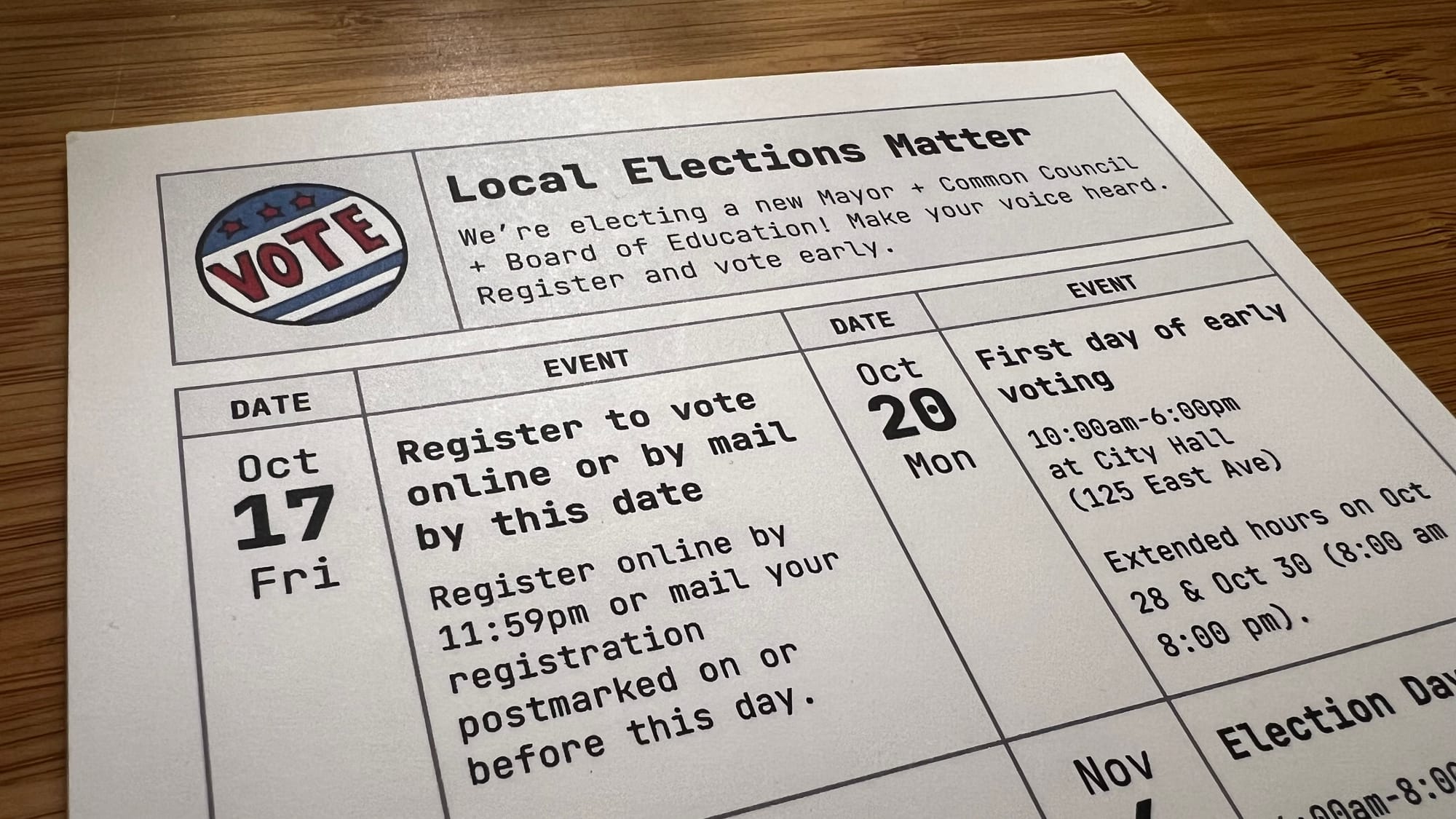
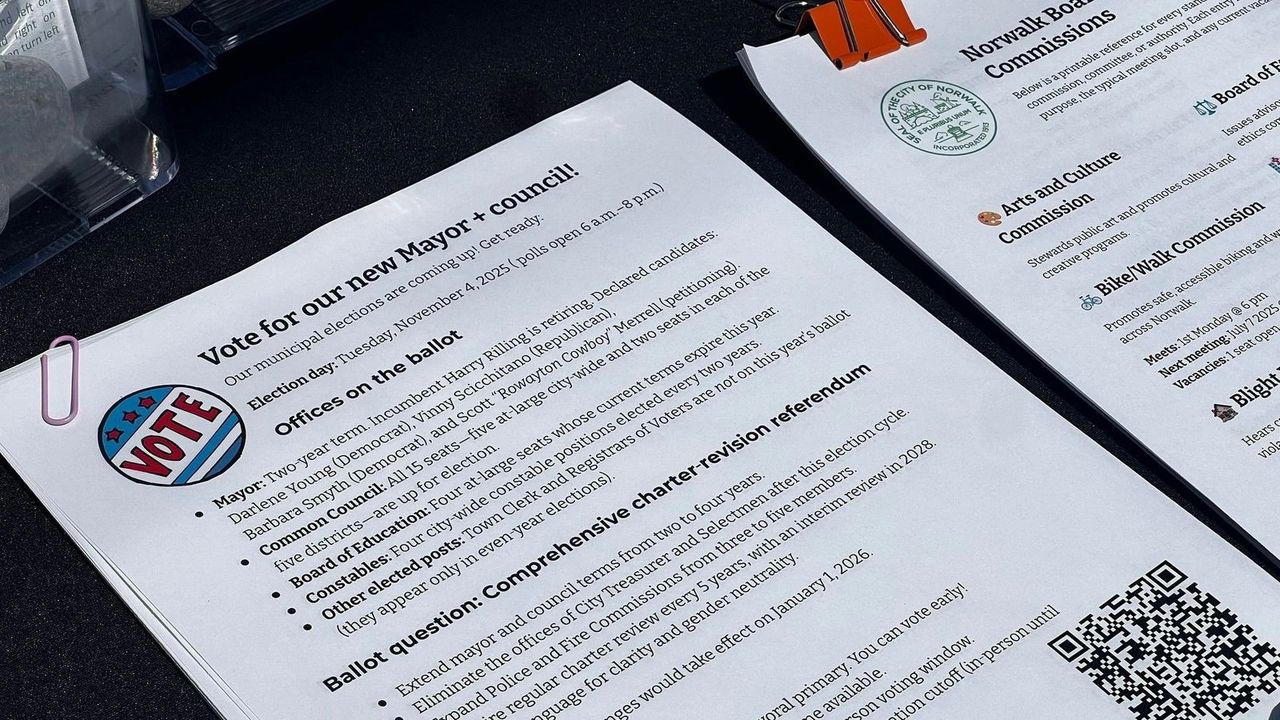
As the primary ended and the general election approached, I focused on voter awareness: how to register, when to vote, and where to find reliable information.
That turned out to be harder than expected. The city website contained outdated and sometimes conflicting details, with some pages still referencing the previous year’s election. Even motivated residents had to work to find clear answers.
Community-led resources filled some of that gap. Nancy on Norwalk, in particular, carried a huge share of the burden in helping residents understand who the candidates were and what issues were at stake.
Creating simple tools for participation
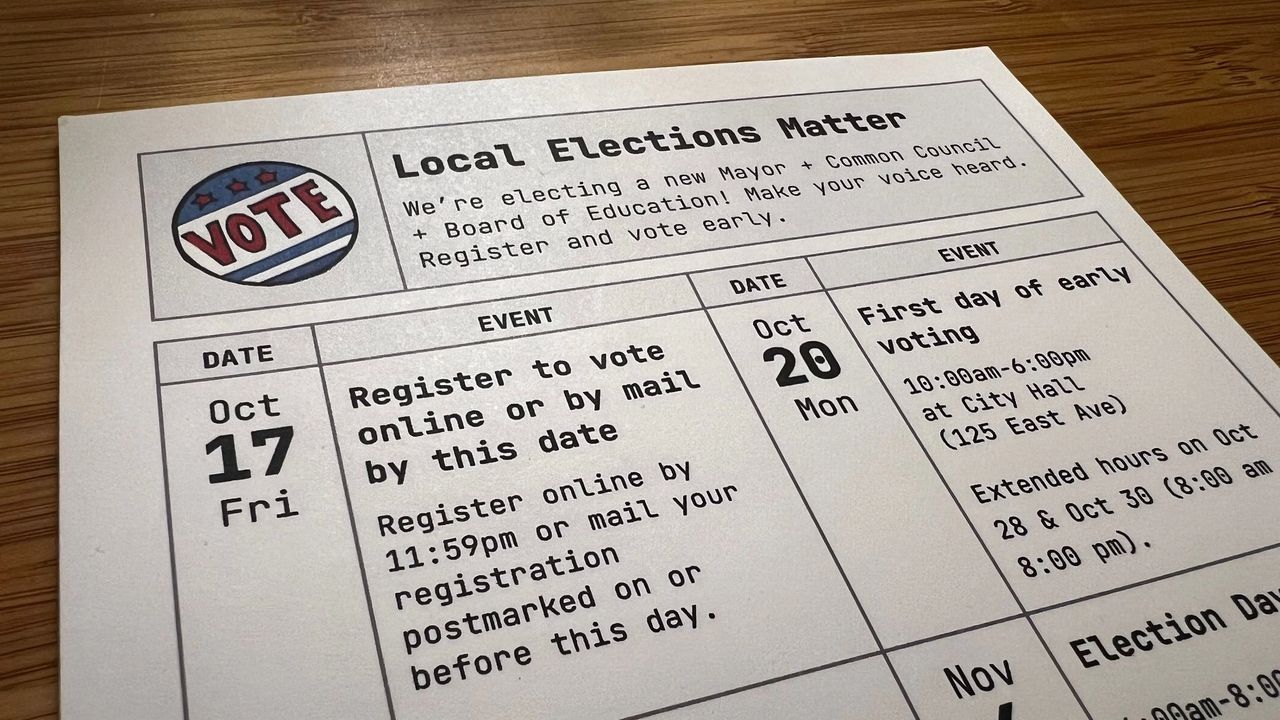
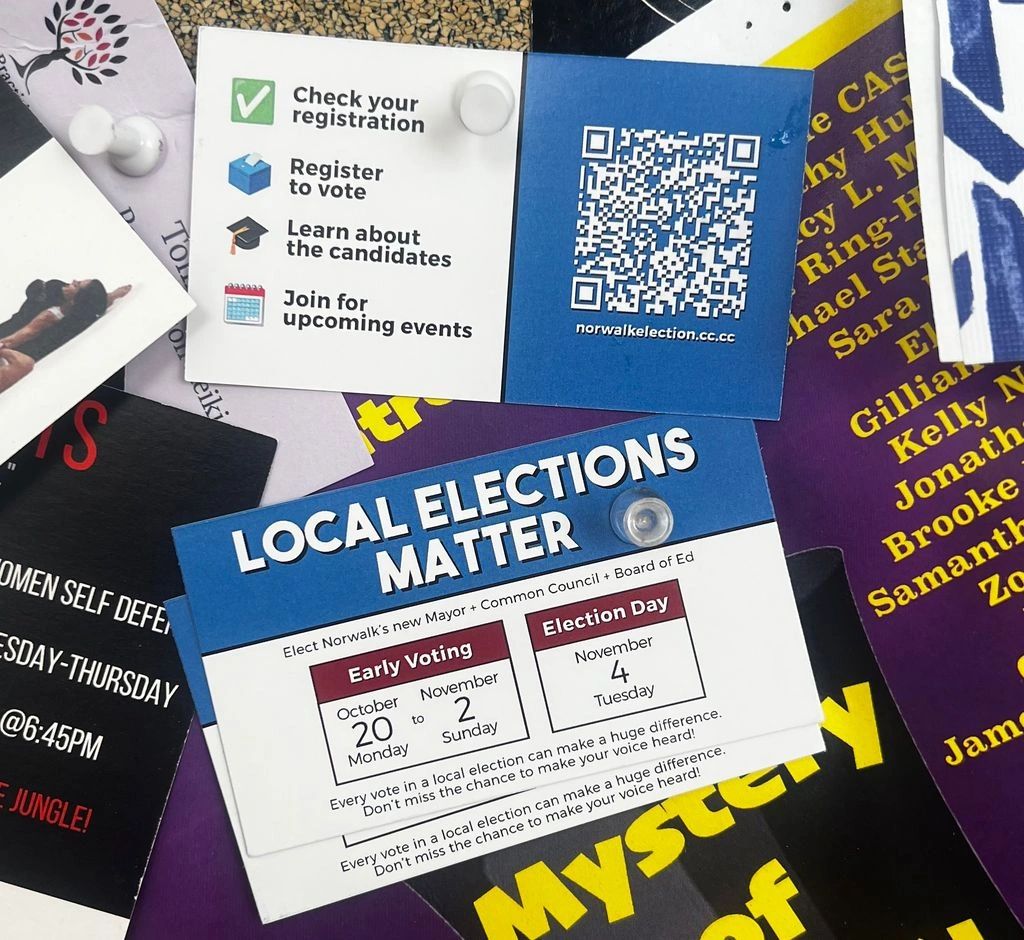
Seeing these barriers pushed me to focus on connection through clarity. I created flyers, small cards, and a QR code that linked to a single page with the most important resources. The goal was straightforward: reduce friction and make it easier for people to stay engaged once their interest was sparked.
Beyond materials, I showed up. I attended meetings, debates, and community discussions - not as an expert, but as a neighbor. I helped organize phone-banking and postcard-writing sessions at a local café, which became as much about conversation and camaraderie as outreach. Over time, four small gatherings took place - two that I hosted and two hosted by others - and each one strengthened a sense that civic life is something we do together.
Coordinating with the local party and other organizers gave me a behind-the-scenes look at how civic systems function, but just as importantly, it showed me how relationships, not systems, are what actually move people to participate.
Measuring impact - and redefining success
Did any of this measurably change voter turnout? Probably not.
There was a strong national political tailwind that year, and local results reflected that. If my efforts had any direct effect, I don’t have a way to quantify it.
But focusing only on turnout misses something essential. Connection is rarely immediate or measurable, but it’s still powerful.
What ended up mattering
People noticed that someone cared enough to show up consistently - to be present, to listen, and to make the process feel human. That presence helped build trust.
I saw how small, relational moments like answering a question at the market, sharing a flyer over coffee, and hosting a casual gathering can lower the barrier to participation. I also gained a deeper understanding of where communication breaks down and how much opportunity there is for cities to lead with clarity, warmth, and connection.
Relationships that opened new doors
Perhaps most importantly, relationships grew out of this work.
I’m now joining a task force with Norwalk’s Department of Sustainability, contributing to a committee focused on health and happiness - an area that overlaps closely with the social and civic health I care deeply about.
Through Norwalk's Sustainable Streets, where I’m on the leadership team, our 2026 platform includes advocating for more city resources for street-activation efforts - events that bring people out of their homes, onto shared spaces, and into contact with small businesses and neighbors.
Looking ahead
This experience is why I’m excited to serve as The CT Collaborative to End Loneliness' first local Community Connector.
Over the coming months, I’ll be sharing short reflections on what it looks like to foster social connection right where you live - small experiments, simple ideas, and lessons learned from showing up consistently. None of this requires a title or special expertise. It starts with paying attention, creating welcoming moments, and making it easier for people to feel like they belong.
My hope is that these stories spark ideas for residents in other towns who want to strengthen connection locally, in ways that fit their own communities.